
How to address hair loss grief
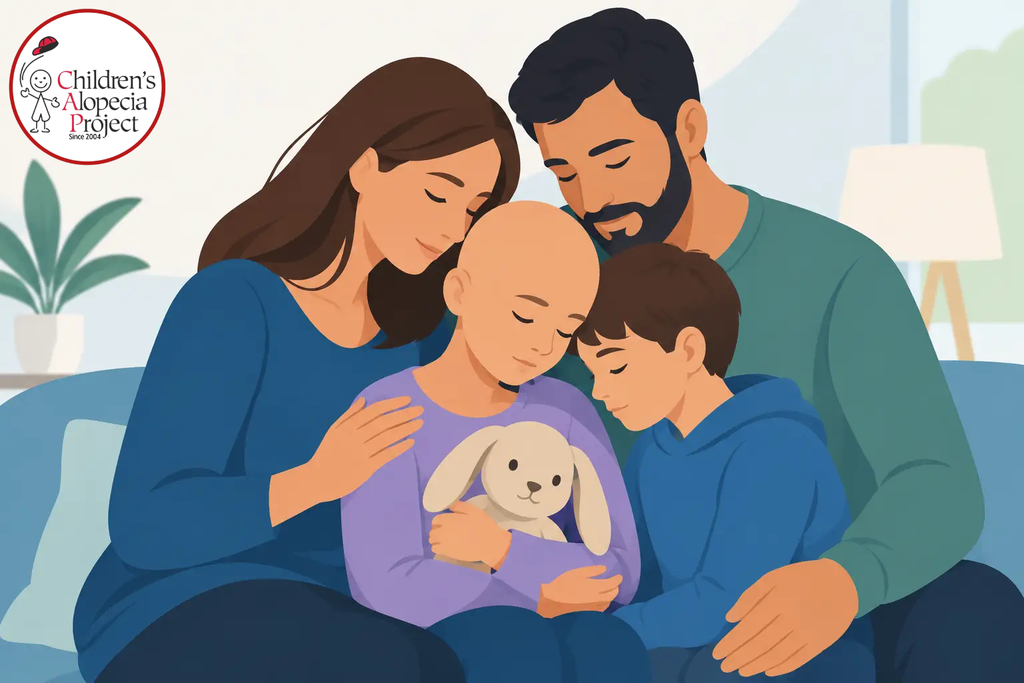
A child may notice the first missing patch in the mirror. A teen may stop wanting to be in photos. A parent may lie awake wondering how school, friendships, or a favorite activity will feel now. To address hair loss grief, a family does not need perfect words or a quick way to make the hard feelings disappear. They need room to be honest, steady love, and people who understand.
Grief can show up alongside alopecia even when your child is brave, funny, confident, and surrounded by love. It can come and go without warning. It may look like sadness, anger, embarrassment, worry, silence, or a strong wish to be left alone. None of those feelings mean your child is doing alopecia wrong. They mean something important has changed.
Why hair loss grief can feel so big
Hair is often tied to how a child sees themself and how others expect them to look. When that changes, children and teens may grieve more than hair. They may grieve feeling unnoticed in a crowd, a familiar hairstyle, privacy, or the ease of walking into a new classroom without questions.
Parents and caregivers may have grief too. You may mourn the picture you held of childhood being uncomplicated. You may feel angry that your child has to handle staring, comments, or misunderstandings. You may also feel guilty for having those emotions when your child is the one living with alopecia. Please make space for your own feelings without placing them on your child to carry.
Siblings can feel this change as well. They may worry about their brother or sister, feel protective, or feel confused when family attention shifts. The whole, wonderful family deserves support because alopecia affects the atmosphere of a home, not just the person losing hair.
Address hair loss grief without rushing it away
The instinct to cheer a child up is loving. Yet phrases like “Don’t worry about it” or “You still look fine” can accidentally tell them that their sadness is too much. Start by listening for what they are actually saying.
If your child says, “I hate how I look,” you do not have to argue them out of it. Try: “That sounds really painful. Do you want to tell me what happened today?” If they say they do not want to talk, let them know the door stays open. A simple “I am here whenever you are ready” can bring more comfort than a speech.
Children often express grief in pieces. A younger child may become upset before picture day or refuse a hat they once liked. A teen may withdraw from friends, avoid video calls, or become especially alert to other people’s reactions. Notice the pattern without turning every quiet moment into a big conversation. Gentle, repeated invitations build trust.
It also helps to name the truth clearly: it is okay to miss what was familiar and still be proud of who you are. Those feelings can exist together. A child does not have to choose between grieving hair loss and building confidence. Confidence is not pretending nothing hurts. It is knowing they are worthy of respect and belonging while they feel what they feel.
Let your child lead the choices that are theirs
Alopecia can make a child feel as though other people suddenly have a lot of opinions about their body. Restore a sense of ownership wherever possible. Ask how they would like to handle questions, whether they want help explaining alopecia to classmates, and what makes them comfortable for school events, sports, photos, or sleepovers.
Their answer may change over time. A child who wants to explain everything one month may want privacy the next. A teen who loves a bold look may later want something quieter. Supporting their choice does not mean every situation will be easy. It means they know home is a place where they do not have to defend their appearance.
Build a circle where no one has to explain
Isolation can make grief heavier. Meeting another child with alopecia can create a powerful shift: “Oh, you get it.” In a peer community, children can laugh, play, ask questions, compare school stories, and simply be kids. They are not the only bald child in the room. They are not a lesson, a curiosity, or an inspiration story for someone else.
That is why connection matters for parents, too. Other caregivers may understand the strange mix of protective love, worry, pride, exhaustion, and hope that can be difficult to describe elsewhere. They may share practical ideas, but just as valuable is the relief of being heard by someone who does not need a long explanation.
Children’s Alopecia Project creates places for CAP Kids and families to find that kind of connection through camps, family gatherings, local groups, and supportive peer experiences. These spaces are not about asking children to be positive every minute. They are about belonging exactly as they are.
Help school become part of the support team
School can be where hair loss grief gets louder, especially when classmates stare, ask personal questions, or repeat misinformation. A proactive conversation with teachers, counselors, coaches, and school leaders can reduce the pressure on your child to manage it alone.
Ask your child what support would feel useful before making a plan. They may want a trusted adult to check in privately, a clear response to teasing, flexibility around hats, or help educating the class. Some children want to participate in that conversation. Others would rather a parent or caregiver take the lead. There is no one right approach.
Be specific about expectations. Your child deserves adults who respond to unkind comments promptly, protect their privacy, and treat alopecia as a part of their life rather than the whole story. When a school understands that goal, it can help create a classroom where differences are met with respect instead of attention.
Make room for joy that has nothing to prove
Grief deserves compassion, but it should not take over every corner of family life. Keep making room for the things that make your child feel like themself: music in the car, a favorite game, time with a friend who makes them laugh, a sport, art, or a family tradition. Joy is not denial. It is a reminder that alopecia does not get to write every line of their story.
You can also practice affirmations that speak to identity, not appearance. Tell your child what you notice about their courage, kindness, humor, creativity, persistence, and heart. Be genuine and specific. “I loved how you included the new kid today” can land more deeply than a vague compliment.
If sadness, anxiety, withdrawal, sleep changes, or school struggles begin to interfere with your child’s daily life, additional emotional support can be a caring next step. A counselor who listens well can give your child a private place to sort through feelings and help your family find language that fits.
You do not have to make grief disappear
There may be days when your child feels strong and days when they feel tired of being noticed. There may be family milestones that bring fresh feelings back to the surface. That does not mean you have gone backward. Grief is not a straight line, and neither is growing into confidence.
Keep showing up with calm honesty. Keep reminding your child that they are more, even if their hair is less. With time, connection, and a community that sees the whole person, a CAP Kid can learn something lasting: they are an original, not a copy, and they never have to face hard days alone.